


Summary
Counties and municipalities should be competing for construction of data centers in appropriate locations within their boundaries.
Electricity is the biggest cost and constraint on local resources, and that bottleneck will exist independent of data center construction.
DataCenterAtlas.org web tool highlights the significant benefits of data centers, especially in terms of property tax revenue and jobs.
The most common reasons for local opposition to data centers can be overcome with better information, more transparent decision processes, and a focus on aesthetics.
“Prosperity is energy-intensive.”
(Josh Smith, Testimony, House Oversight Committee, 2025)
“...[W]e are entering a very new age... which has made clear the critical importance of both digital infrastructure and connectivity in every sector of the economy and every corner of the world, as well as energy.”
(Satya Nadella, CEO, Microsoft, “G7 Summit Remarks,” 2024)
The current wave of American economic infrastructure is power and energy infrastructure followed closely by digital infrastructure and data centers. And data center investment likely has the strongest growth trajectory.1
Across the United States, billions of dollars are being invested to build the computing infrastructure that powers artificial intelligence, cloud computing, scientific research, financial markets, healthcare, manufacturing, and almost every other industry. It is not a question of if America will build them. It is a question of where.
The data center decision process is one that is largely being decided at the county and municipal level. However, a recent uptick in state-legislature-led data center building restrictions and proposed limitations is redirecting much of the investment.2 State legislatures are setting tax policy and utility commissions are governing rates, but the zoning approvals, conditional use permits, and community negotiations that determine whether a project happens at all mostly sit with county commissions, boards of supervisors, and municipal planning departments.
This is a serious responsibility, and local officials are being asked to carry it amid a noisy, often misleading national conversation. Residents arrive at public hearings with claims pulled from viral posts; developers arrive with rosy projections; and officials are left to referee without neutral, accessible data. The Abundance Institute built the DataCenterAtlas.org web application to fill that information gap.3
This article lays out the framework for how county leaders can capture the substantial benefits of data center development, address legitimate community concerns with transparency, and avoid policy mistakes that leave communities with neither the revenue nor the resolution of the concerns.
Localities Across America Are Already Competing
Many counties and municipalities have already concluded that data centers represent an attractive economic development opportunity. Communities across Texas, Illinois, Virginia, Ohio, and Arizona have actively competed for data center investment because these facilities can generate significant local economic activity.4
Montana, Ohio, South Carolina, and New Hampshire have passed, are currently debating, or introduced “Right to Compute Act” legislation, which makes it harder for state governments to enact restrictive regulations on computational resources including data centers. Right to compute laws require governments to justify restrictions under a heightened standard, while still allowing narrowly tailored public safety regulations. Table 1 shows the current status of Right to Compute laws in US states.5
Data center benefits to localities generally fall into four categories:
Thousands of construction jobs during the building phase.
High-paying permanent operational phase jobs.
Large property tax revenues for counties and school districts and sales and use tax for the states.
Additional economic activity as suppliers, contractors, restaurants, housing, and local businesses expand to serve a growing workforce.
Let’s start with the fiscal reality. Data centers are among the most favorable land uses a county can host from a budget perspective: enormous capital investment concentrated on a modest footprint, generating property tax revenue far out of proportion to the public services the facility consumes. A data center does not add students to schools, cars to rush hour, or meaningful demands on police and fire. It does add assessed value, often billions of dollars of it, once buildings, servers, and electrical equipment are counted.6
Loudoun County, Virginia, which is home to the world's densest concentration of data centers, reports that the facilities occupy roughly 4 percent of just the county's commercial land yet produce 38 percent of its general fund revenue and nearly half of all property tax revenue, returning about $26 in taxes for every $1 the county spends serving them.7
But the story is no longer confined to Northern Virginia. Georgia's state economic analysis found new data center complexes transforming parcels worth tens of millions into assessed properties worth more than two billion dollars, and state officials report that metro Atlanta counties are planning new school construction and long-deferred water infrastructure on the strength of that revenue.8
Rural counties, in particular, have found that a single campus can anchor a tax base that decades of conventional economic development never delivered. One example comes from Richland Parish, Louisiana, which has a population of about 20,000, where the local school board issued bonus checks worth nearly $51,000 to every teacher based on the amount of sales tax revenue that was generated above expectations during just the initial construction phase of Meta’s Hyperion data center.9 Local businesses have seen increased sales, and neighboring Ouachita Parish also issued much larger than normal bonus checks to their teachers.10
The DataCenterAtlas.org web tool from the Abundance Institute lets officials see accurate county-specific benefits and costs from data centers for themselves. It maps data center capacity, tax revenue, and water demand across the United States at the county level, and translates the raw numbers into equivalences that residents can evaluate. When a constituent asks “what will this do to our water supply?”, the DataCenterAtlas.org tool gives an official a grounded answer based on reasonable assumptions grounded in publicly available sources.
The Numbers Can Be Surprisingly Large
Consider a representative example. A 300-megawatt data center located in a county with a 1.0 percent effective property tax rate—similar to Reagan County, Texas—could generate roughly $13.3 million in annual county property tax revenue, even if the county granted a 50 percent property tax exemption.
To put that into perspective, that annual revenue could finance approximately:
construction of more than three neighborhood parks each year, or
salaries for roughly 140 teachers.
The employment effects of this hypothetical data center are similarly significant.
Construction of a facility this size is estimated to support approximately 1,800 jobs during the construction period before stabilizing at roughly 168 permanent high-paying operational jobs, or nearly the same amount of people employed at two average grocery stores. Those workers then generate additional spending throughout the local economy.
Data Centers Are Not Right for Every Locality
We fully understand that not every locality should pursue data centers. Some communities may reasonably conclude that the costs outweigh the benefits. But too often the debate begins and ends with overstated headlines, without carefully weighing the substantial economic opportunities these facilities can create.
There are legitimate reasons why a county may decide that recruiting data centers is not the best strategy.
If electricity is already scarce or prohibitively expensive, the additional electrical demand may not be practical. Localities with very limited undeveloped land or exceptionally high land values may find that alternative uses generate greater economic value. And ultimately, local governments should respect the preferences of their residents if a community simply does not want this type of development.
Those are all reasonable considerations. But they should be weighed against the benefits, and not blanket restricted across all the counties of entire states.11 Data center developers, like those in every other industry, are also likely to avoid areas where the costs are the highest.
Jasmine Sun, a writer for The Atlantic, took a 10-day road trip through Wisconsin and Michigan interviewing activists, local officials, union leaders, politicians, and residents to understand why opposition to data centers has become such a potent political issue. In her article, Sun (2026) concludes that local opposition to data centers is driven by four major factors.
Visible local costs: data centers can be large, noisy, energy-intensive industrial facilities that can disrupt communities during construction.
Broken decision-making processes: Residents often feel projects are negotiated in secret (through NDAs or limited public input), leaving communities feeling excluded.
Weak perceived local benefits: Many people doubt promises of jobs, tax revenue, or economic development, particularly after past disappointments like Foxconn.
Deep distrust of elites: The friction stems from a rising populist sentiment across America, where residents suspect that political leaders and large tech firms prioritize corporate gains over the welfare of local citizens.
Data center producers and the localities where they reside need to do a better job of communicating the true benefits and costs, including the public in a more transparent decision process. Sun suggests that one reason for states superseding localities in regulating data centers is that local officials have become overwhelmed by increasingly contentious local battles.
In a recent interview with Josh Einiger and Olympia Sonnier (Aug. 6, 2026) of MS NOW, Shark Tank celebrity investor Kevin O’Leary admitted that transparency and communication were severely lacking in the approval process for the proposed Project Stratos data center in Box Elder County, Utah.
If there is one thing O’Leary and his Utah detractors finally agree on, it is that his company failed to provide enough information and reach out to locals before announcing the gargantuan plans.
“We really screwed this up,” O’Leary admitted to MS NOW. “We have not communicated what we do.”
(Einiger and Sonnier, “Kevin O’Leary wants to atone for his data center sins,” Aug. 6, 2026)
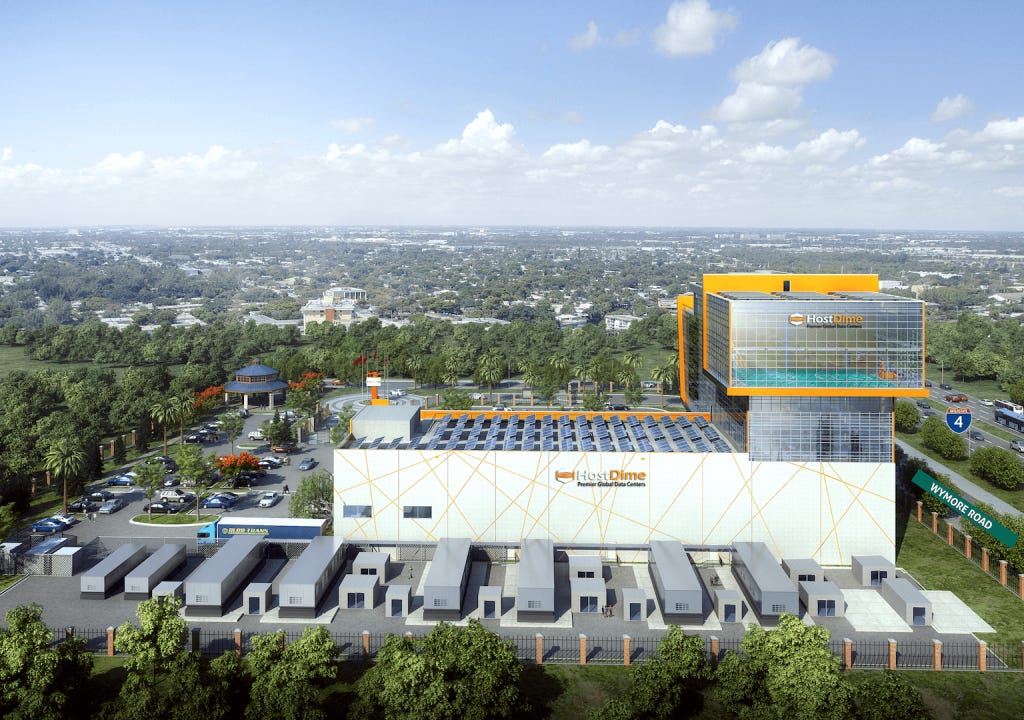
More transparency on the part of city councils, zoning and planning commissions, and county commissions could come in the form of mandatory disclosure of tax exemption terms between the data center operator and locality. Other city Mayors, such as Craig Johnson, Mayor of Elk Grove Village, Illinois, have found that mandating a level of aesthetic design into data centers can go a long way toward helping local citizens be accepting of the project.12 The image at the top of this article is a great example of a data center that is designed to be a positive visual contribution to the Eatonville, Florida community, where that data center is schedule to be operational by Q3 2026.
The Environmental Picture is Changing
Much of the public discussion surrounding data centers focuses on environmental concerns, and these deserve serious consideration. Fortunately, the technology is evolving rapidly.
Many of the newest data center facilities employ closed-loop liquid cooling systems that dramatically reduce water consumption compared with earlier generations of data centers. Electricity demand remains substantial, but computing hardware continues to become more efficient, while utilities across the country are investing heavily in new generation and transmission capacity.
In fact, counties seeking sustained economic growth will likely need expanded electrical infrastructure regardless of whether they pursue data centers. Reliable and abundant electricity is becoming a prerequisite for modern economic development of nearly every kind.
As our former colleague at the Abundance Institute said in his testimony before the House Oversight Committee:
“Prosperity is energy-intensive…. America’s economic growth, technological progress, and improved quality of life all require more energy, not less. There is a clear relationship between energy use and wealth. Harnessing energy is both a cause and a consequence of rising living standards.”
(Josh Smith, Testimony, House Oversight Committee, Subcommittee on Economic Growth, Energy Policy, and Regulatory Affairs, July 22, 2025)
From the Electric Power Research Institute:
“And meeting this demand with energy supply does not need to drive up costs for county residents. Much of a utility’s generation, transmission, and distribution expense is fixed, so adding a data center customer that uses infrastructure consistently can improve asset utilization and reduce the fixed-cost component of each kilowatt-hour.”
(EPRI, “The Economics of High Load Factor Customers: How AI Datacenters Can Reduce System-Wide Electricity Rates,” Nov. 2025)
There are many variables that go into the energy cost equation, but Loudon County residents pay at or below the national average electricity bills despite being the worldwide epicenter of the data center buildout.
Don’t Sit Out This Infrastructure Boom
America is in the early stages of a once-in-a-generation expansion of computing capacity. The facilities will be built somewhere. The question facing county commissioners and municipal leaders is whether their communities should compete for those investments or watch them go elsewhere.
That decision deserves more than slogans or social media headlines. It deserves careful analysis of both the benefits and the costs. If your city or county is considering its economic future, we invite you to explore DataCenterAtlas.org. Better information leads to better decisions, and better decisions lead to stronger communities.
References
Brandsaas, Eirik Eylands, Daniel Garcia, Robert Kurtzman, Joseph Nichols, and Adelia Zytek, “Estimating Aggregate Data Center Investment with Project-level Data,” Finance and Economics Discussion Series, Federal Reserve Board of Governors (Dec. 17, 2025).
Bobrowsky, Meghan and Ben Eisen, “The Teachers Getting $50,000 Bonuses Thanks to a Massive Meta Data Center,” The Wall Street Journal (Jun. 11, 2026).
Einiger, Josh and Olympia Sonnier, “Kevin O’Leary wants to atone for his data center sins,” MS NOW (Aug. 6, 2026).
EPRI, “The Economics of High Load Factor Customers: How AI Datacenters Can Reduce System-Wide Electricity Rates,” Electric Power Research Institute (Nov. 2025).
Evans, Richard W., Jared Lambert, and Bryce N.Y. Chinault, “Introducing DataCenterAtlas.org,” Econosseur (June 9, 2026).
Glock, Judge, “The Surprising Heart of the Data-Center Boom,” City Journal (Spring 2026).
Griffin, Greg S., “Tax Incentive Evaluation: Georgia Data Center Sales & Use Tax Exemption,” Georgia Department of Audits and Accounts (Dec. 2025).
Justice, Jessie S. and Tommie L. Shepherd, “Tax Incentive Evaluation: Georgia Data Center Sales & Use Tax Exemption,” Carl Vinson Institute of Government, University of Georgia (Dec. 2025).
Metzger, Daniel J., “Local Moratoria Against Data Center Construction: Considerations for Municipal Governments,” Climate Law, A Sabin Center Blog, Sabin Center for Climate Change Law, Columbia Law School (May 27, 2026).
Nadella, Satya, “Remarks at the 2024 G7 Summit,” Microsoft Corporate Blogs (June 13, 2024).
NCSL, “Subsidizing Servers: How States Are Competing to Attract Data Centers,” Report, National Conference of State Legislatures (April 1, 2026).
Smith, Josh, “The New Atomic Age: Advancing America’s Energy Future,” Testimony, House Oversight Committee, Subcommittee on Economic Growth, Energy Policy, and Regulatory Affairs (July 22, 2025).
Sun, Jasmine, “no data centers in my backyard,” @jasmine’s substack (Aug. 3, 2026).
Tagami, Ty, “State report says data centers a boon to economy despite tax giveaway,” The Current (Jan. 7, 2026).
Truong, Thanh, “Meta’s $27 billion AI data center is transforming rural Louisiana,” Fox 8 Local First News (May 12, 2026).
The US Census Bureau construction spending data shows nonresidential power being the highest spending category at an annualized amount of $177.6 billion in June 2026. See Brandsaas, et al (2025) for a Federal Reserve paper looking at more accurately measuring data center investment, estimating annualized 2026Q2 data center investment to be $370 billion. Using this method on the other categories would likely also result in an upward adjustment. But data center investment is currently a large category.
The Maine legislature passed a statewide data center moratorium on new large datacenters, but the Governor vetoed the bill and the legislature failed to override it. The National Conference of State Legislatures maintains a web page list of states and bills that are trying to ban data centers. This list currently includes Delaware, Georgia, Maine, Maryland, Michigan, Minnesota, New Hampshire, New York, Oklahoma, Pennsylvania, South Carolina, South Dakota, Vermont, Virginia, and Wisconsin. Some localities are also tightening restrictions on data center construction, such as in Northern Virginia and California counties, multiple Michigan and Pennsylvania townships, and Minnesota municipalities. See Metzger (2026).
Visit https://www.datacenteratlas.org/ for the web application. Also see Evans, Lambert, and Chinault, “Introducing DataCenterAtlas.org,” (Jun. 9, 2026).
See NCSL (2026) report, “Subsidizing Servers: How States Are Competing to Attract Data Centers.” Organized labor and municipalities in Illinois have created the Coalition for Responsible Data Centers (CRDC), which advocates for data centers being built in Illinois municipalities (https://www.illinoiscrdc.com/).
Montana was the first state to pass their Right to Compute Act (SB 212), signed into law on Apr. 16, 2025. Ohio’s legislature introduced the Ohio Right to Compute Act (HB 392), which has cleared its House committee, but has not yet passed the Ohio House. The New Hampshire Right to Compute Act (HB 1124) passed the house but was not taken up by the Senate, which sent the bill to interim study. This means the bill was not passed in the New Hampshire legislative session but is available for further study and reintroduction in future sessions. The South Carolina Right to Compute Act (HB 4657) was introduced this session but did not make it out of its House committee. As such, the South Carolina bill must be reintroduced in the next legislative session.
See Griffin (2025) Georgia Department of Audits and Accounts, “Tax Incentive Evaluation: Georgia Data Center Sales & Use Tax Exemption.” Also, Elk Grove Village, Illinois, Mayor, Craig Johnson, said at the Coalition for Responsible Data Centers 2026 Mission Critical Roundtable (Aug. 7, 2026) that “data centers pay more in property taxes per square foot than other businesses, up to 6 times more.”
See Glock (2026).
See Justice and Shepherd (2025) and Tagami (2026).
See Bobrowsky and Eisen (2026).
See Truong (2026).
The Maine legislature passed a statewide data center moratorium on new large data centers, but the Governor vetoed the bill and the legislature failed to override it. The National Conference of State Legislatures maintains a web page list of states and bills that are trying to ban data centers. This list currently includes Delaware, Georgia, Maine, Maryland, Michigan, Minnesota, New Hampshire, New York, Oklahoma, Pennsylvania, South Carolina, South Dakota, Vermont, Virginia, and Wisconsin.
Mayor Johnson of Elk Grove Village, Illinois discussed the importance of requiring new data center projects to have a level of aesthetic design in helping citizens be accepting of new data center projects at the Aug. 7, 2026 Coalition for Responsible Data Centers 2026 Mission Critical Roundtable in Alsip, Illinois.